Professional service
PAT testing in Luton
We provide on-site PAT testing for businesses, landlords and organisations, combining visual checks, appropriate electrical tests and recorded results.

- For
- Businesses, landlords, schools and organisations
- Coverage
- Luton and surrounding areas
- Quotation
- Free, with the scope agreed first
- Approach
- Scope agreed before work begins
What to expect
What the service covers.
PAT is a familiar name for the inspection and testing of portable or movable electrical equipment. Not every item needs the same test or the same interval: equipment type, environment, user behaviour, previous results and the way the item is moved all influence a proportionate maintenance approach.
We provide on-site PAT testing for businesses, landlords and organisations in Luton and surrounding areas. We agree the equipment and access arrangements in advance, inspect and test as appropriate, record the results and explain the next step for items that do not pass.
What is included
The work, defined before it begins.
Proportionate inspection and testing for electrical equipment used at work or in managed property.
- 01Visual inspection of equipment and flexible leads
- 02Electrical tests appropriate to the equipment
- 03On-site identification and results
- 04Clear handling of failed items
- 05Testing planned around the premises and inventory
Risk-based maintenance
The label is not the purpose of the test.
The goal is to identify damage or electrical defects and support a sensible maintenance record, not to apply the same schedule to every appliance regardless of risk.
- 01
Equipment type
Construction, earthing arrangements and how an item is used affect which checks or tests are appropriate.
- 02
Working environment
A fixed office monitor and frequently moved site equipment experience very different patterns of wear and damage.
- 03
Previous evidence
Inspection history, failures and user-reported damage help a dutyholder review future maintenance intervals.
In detail
PAT testing, seen more closely.
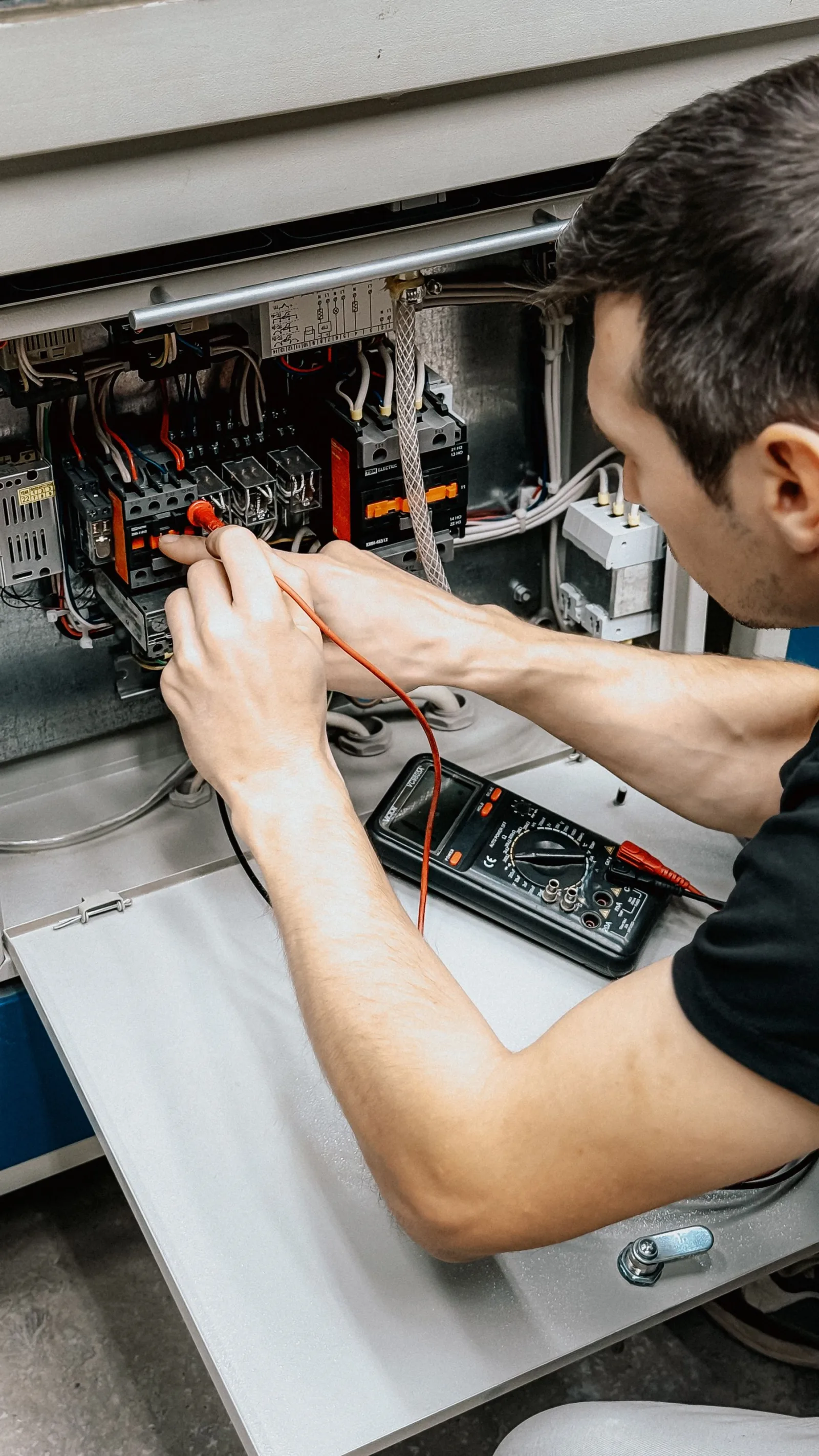
How it works
Three stages. No vague hand-offs.
- 01
Discuss the property
Tell us the premises, approximate equipment quantity, working hours and whether an existing asset list or previous results are available.
- 02
Confirm the quotation
We confirm the visit scope, access arrangements and free quotation so equipment can be made available efficiently.
- 03
Complete and hand over
Equipment is inspected and tested as appropriate, results are recorded and failed items are clearly identified for action.
Useful answers
Before you enquire.
01Is PAT testing legally required every year?
There is no universal rule that every appliance must receive an annual PAT test. Maintenance should be proportionate to risk, equipment type, use, environment and previous experience.
02Does every electrical item receive the same test?
No. The inspection and test method depends on the equipment construction and risk. Some items require visual inspection only, while others are suitable for electrical testing.
03Can testing be carried out at our premises?
Yes. PAT testing is carried out on site. We agree access, equipment availability and operational timing so the visit can be organised with minimal unnecessary disruption.
04What happens when an appliance fails?
The item is clearly identified and the result recorded. It should be removed from use or otherwise controlled until the responsible person arranges repair, replacement or disposal.
Start a conversation
Talk to us about pat testing.
Tell us what you need and where the property is, and we will come back to you with a free quotation.
contact@circuitlinkelectrical.co.uk